Whitefield Property Price Appreciation: 10-Year Price Trends, Growth Drivers & 2030 Outlook
By Sofia Sondh · August 11, 2026 · 6 min read
Summary
Whitefield, East Bangalore's IT-led micro-market, has seen residential prices rise about 213% over ten years (2016–2026), from roughly ₹4,200 to ₹13,000–13,800 per sq ft, with 137% growth in the last five years. Driven by tech parks (ITPB, EPIP), the Purple Line metro, and strong GCC employment, rental yields run 3–6% (5–6% in premium projects), with rents of ₹15,000–40,000 monthly. Prices are projected to grow 8–12% annually through 2030. Sumadhura's Folium project posted 92.9% growth in four years, reaching ₹13,500 per sq ft, reflecting demand for design-led homes in emerging pockets like Doddabanahalli and Siddapura.
In just 10 years, Whitefield has transformed from a quiet IT suburb on Bangalore’s eastern edge into one of the city’s most sought-after residential markets. Property prices across East Bangalore have climbed almost 38% in five years, and premium pockets jumped close to 80% between 2019 and 2024. Early buyers rarely expected this scale of growth, and many newcomers now wonder whether they have missed the window. The honest answer is that the question has changed: it is no longer whether Whitefield will grow, but how and where the next round of value will appear.
Whitefield price & appreciation at a glance (indicative, 2025–26)
| Metric | Figure |
|---|---|
| 10-year growth | ~213% (2016–2026) |
| 5-year growth | ~137% (2021–2026, metro-led) |
| Average price | ₹13,000–₹13,800 / sq ft (premium projects could cross ₹15,000 / sq ft) |
| Rental yield | 3–6% (5–6% in premium gated projects) |
| Monthly rent | ₹15,000–₹40,000 (by configuration and project) |
| Projected growth | 8–12% a year to 2030 |
Why Does Whitefield Function as Its Own Micro-Market?
Whitefield does not simply drift with the wider city; it runs on its own economic engine. At its core is a dense cluster of technology and business parks — International Tech Park Bangalore (ITPB), the Export Promotion Industrial Park (EPIP) Zone and other major tech parks — that house multinationals and Global Capability Centres (GCCs). This concentration of employers creates steady, year-round housing demand. Strong employment inflow feeds rental absorption, and reliable rentals in turn support sustained capital appreciation. The result is a layered, self-sustaining ecosystem where jobs, infrastructure and housing reinforce one another, rather than the uneven, speculative movement seen in less mature corridors.
What Infrastructure Supports Whitefield’s Housing Demand?
Livability is the second pillar of Whitefield’s strength. The micro-market is anchored by established schools such as National Public School, Delhi Public School, The Deens Academy and Orchids The International School, alongside leading hospitals including Aster, Manipal, Vydehi Institute of Medical Sciences and Sri Sathya Sai Super Speciality Hospital. Connectivity has strengthened sharply with the Namma Metro Purple Line linking Whitefield (Kadugodi) directly to central Bangalore, supported by arterial routes such as Old Airport Road, Mahadevapura and Varthur Road. Shorter commutes and a mature social fabric keep vacancy low and demand durable, and spillover into emerging corridors like Varthur Road and Gunjur is driving a wider Whitefield residential property value increase.
How Strong Is Whitefield’s Rental Market?
As of early 2026, Whitefield remains a high-demand destination for IT firms, GCCs and premium residential developments, with rental yields of 3–6% — above the broader Bangalore average, and 5–6% in select premium gated projects. Grade A commercial developments such as Sumadhura Capitol Towers support rising office demand, which drives residential leasing. Professionals consistently favour walk-to-work homes, keeping vacancy rates low and rents firm at ₹15,000–₹40,000 a month. For an investor, this combination of capital appreciation and dependable rental income is exactly what makes Whitefield a resilient, long-hold asset rather than a short-term play.
What Do Whitefield’s Price Trends Over the Last 10 Years Show?
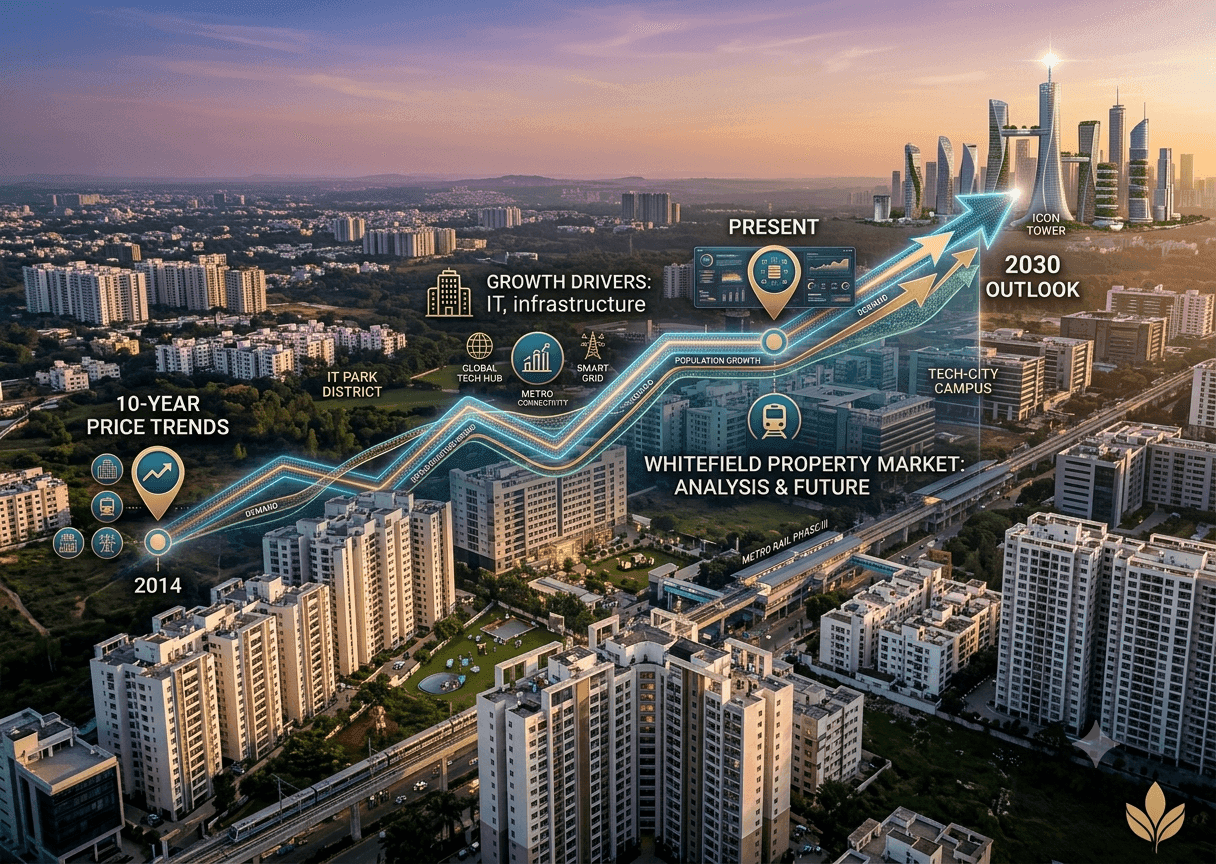
Whitefield’s ten-year record shows how early investment in a high-growth micro-market can multiply capital. Average residential values have climbed from about ₹4,200 per sq ft in 2016 to ₹13,800 in 2026 — a scale of appreciation few Bangalore corridors have matched, driven by the operational Purple Line and steady end-user demand. A rise of this magnitude reflects genuine, infrastructure-led value creation rather than a speculative spike.
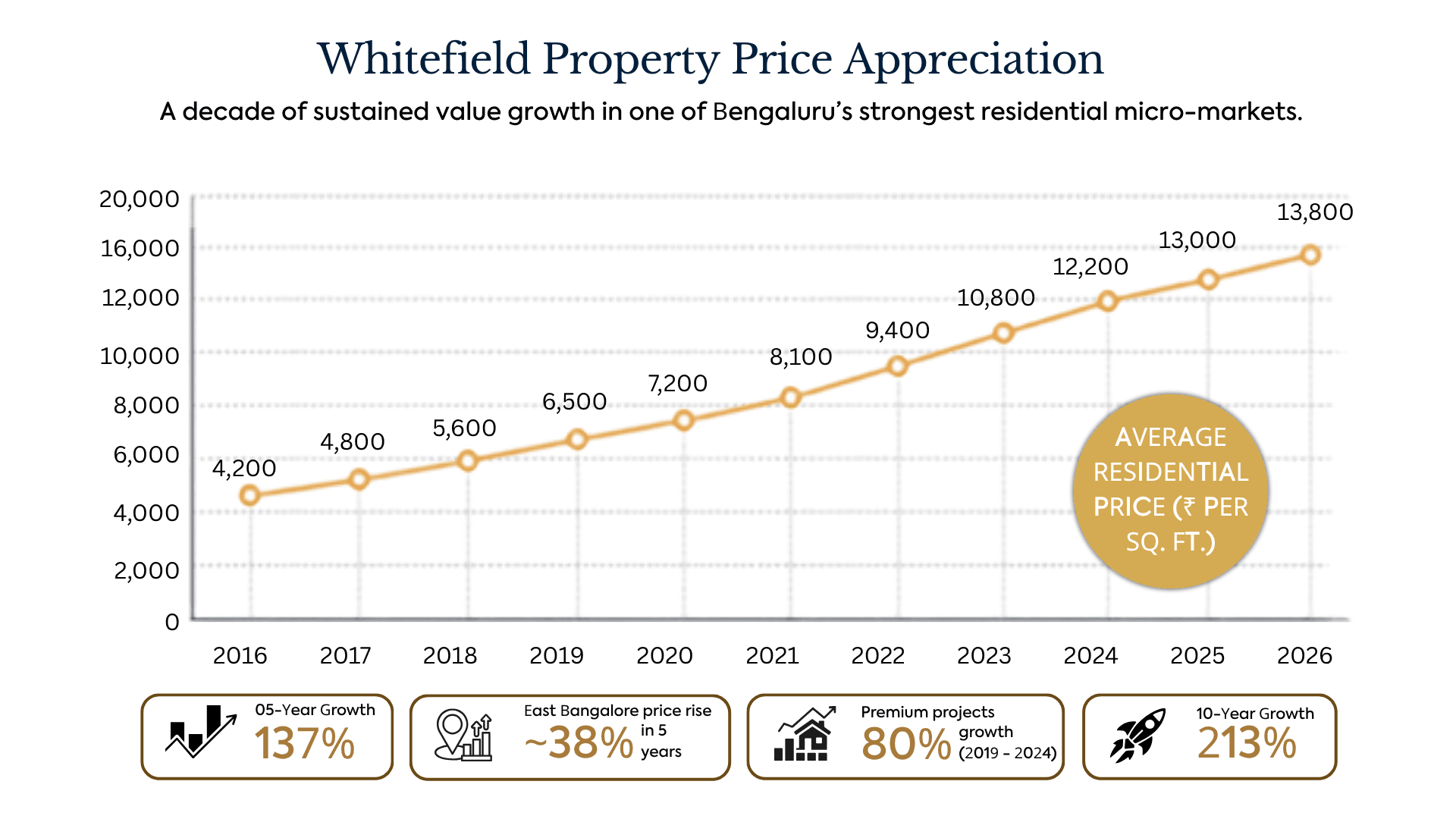
Whitefield average residential price per sq ft, 2016–2026 — ~137% over five years and ~213% over ten. (Figures also in the table above.)
The headline figures — roughly 137% over five years and 213% over ten — also sit in the at-a-glance table above so they remain readable to search and AI engines, which cannot extract numbers baked into an image.
Where Are the Next Growth Pockets Near Whitefield?
As central Whitefield densifies, investment activity is shifting toward well-connected emerging pockets such as Doddabanahalli, Hopefarm Junction and Siddapura. Sumadhura projects like Sumadhura Sarang and Sumadhura Folium here are recording 7–23% annual price growth, helped by proximity to the proposed Peripheral Ring Road and a premium design approach that lifts both rental appeal and long-term appreciation.
How Have Sumadhura Projects Performed in Whitefield?
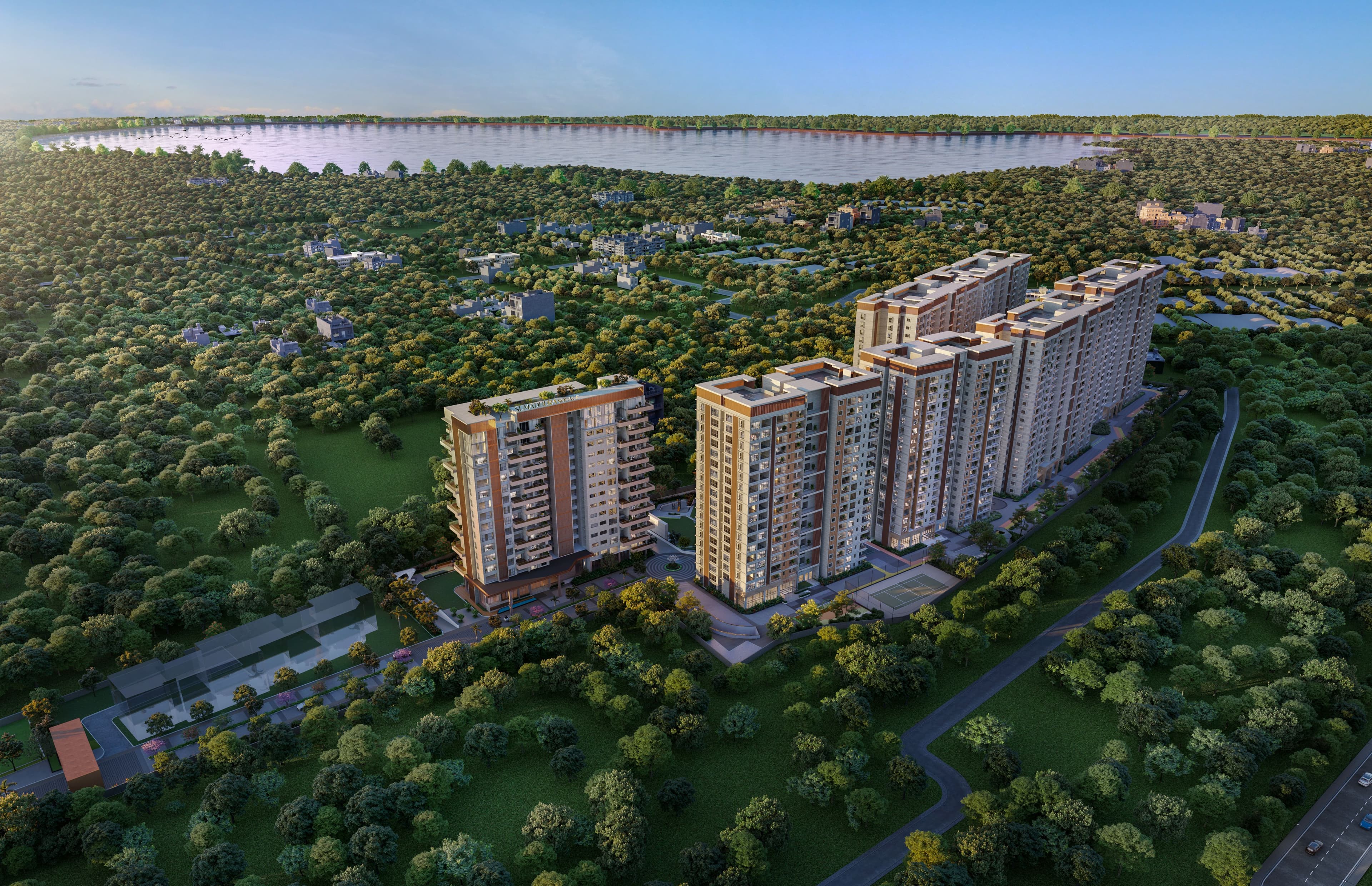
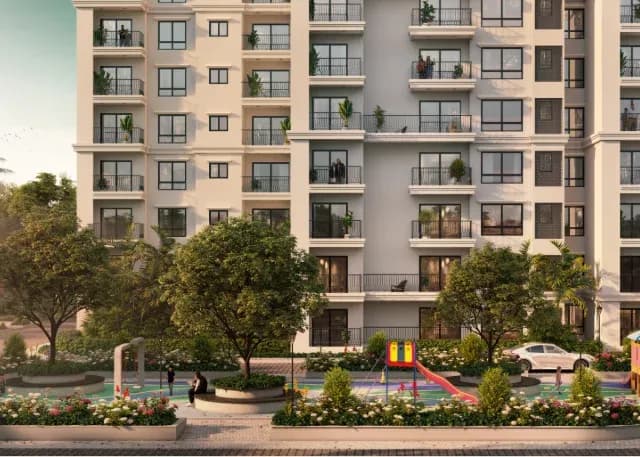
Folium by Sumadhura illustrates the trend at the project level, with roughly 92.9% price growth over four years, reaching ₹13,500 per sq ft in 2025–26. Beyond simply riding Whitefield’s trajectory, Sumadhura homes add value through thoughtful, design-led planning:
- 80–85% open green spaces
• Smart, design-led homes that use space, light and airflow intelligently
- Minimal shared walls for full privacy
- Premium lifestyle amenities
These attributes draw strong, sustained demand from IT professionals and corporate tenants, producing rental yields of 5–6% in select projects — combining capital appreciation with stable monthly income.
Has Whitefield’s Growth Peaked?
The early, easy gains have passed, but the evidence points firmly to continued growth. The Peripheral Ring Road, the Satellite Town Ring Road (STRR) and Bangalore’s 2031 Master Plan all mark Whitefield as a priority growth area.
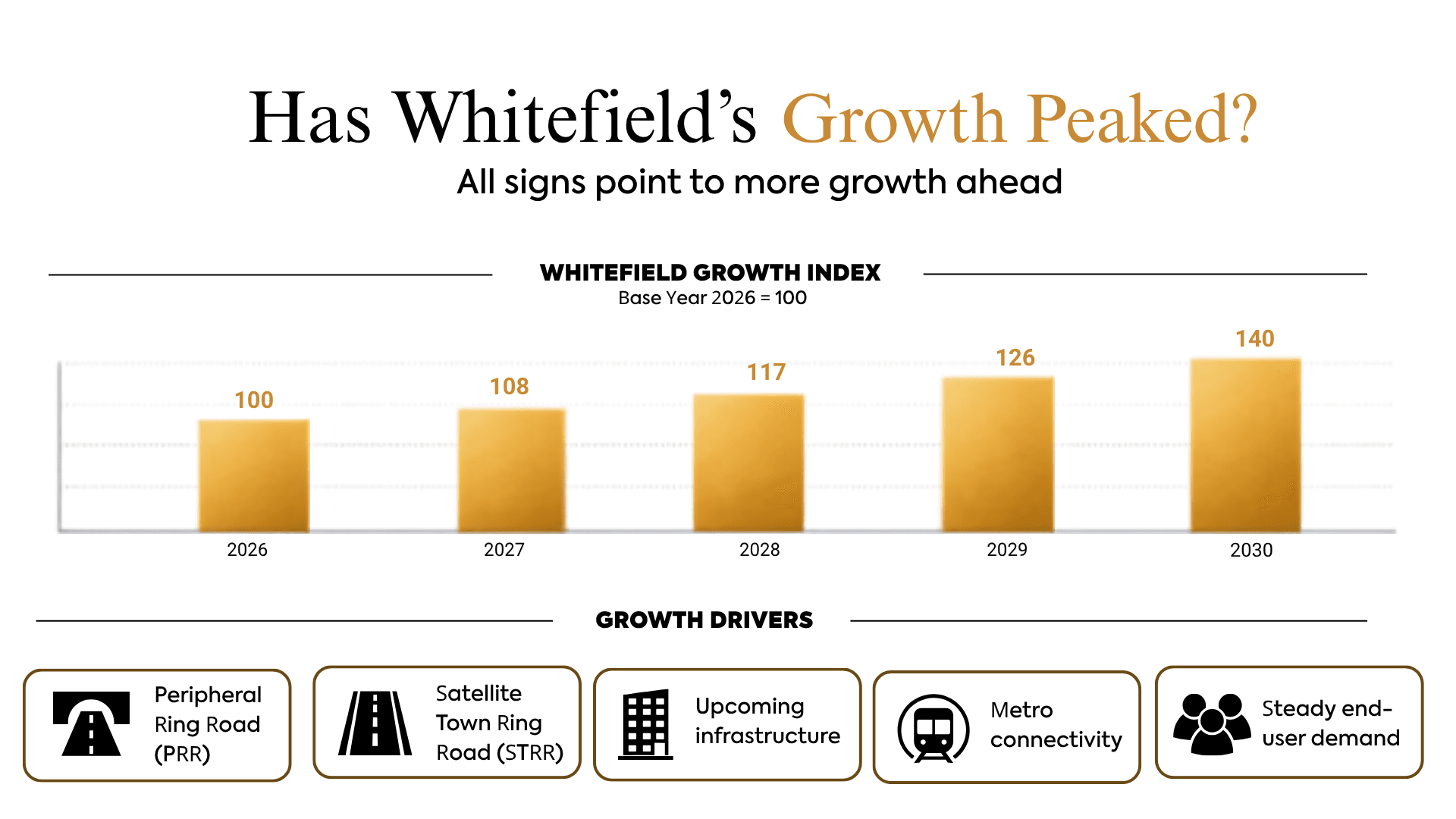
Whitefield Growth Index (base 2026 = 100), projected to reach ~140 by 2030 — an implied 8–12% annual rise.
Prices are expected to rise 8–12% a year to 2030. The opportunity has shifted from “any unit” to “the right pocket” — buyers who choose a well-connected, well-designed Sumadhura address can still find rental security, strong lifestyle options and steady appreciation for years to come.
By Sofia Sondh · August 11, 2026 · 6 min read